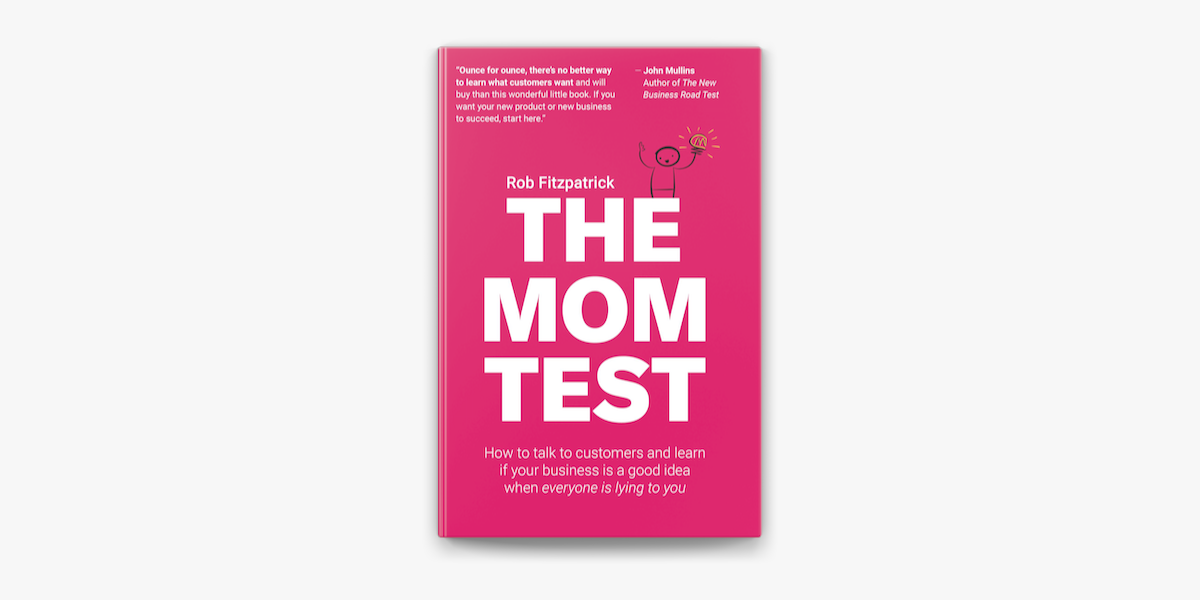
The Mom Test
How to Ask Questions That Deliver Honest and Useful Feedback.
I’ve just finished reading “The Mom Test” by Rob Fitzpatrick, and it resonated with me on multiple levels. Not only did I enjoy the tone and amusing anecdotes, but I also noticed parallels with other frameworks, like Teresa Torres’ Continuous Discovery.
If there’s one core idea you should remember, it’s this: ask questions in a way that even your mom, who loves you and wants to support you, cannot lie to you. This means asking the right questions that won’t lead to biased or untruthful responses.
Avoid Leading Questions
One of the first things to remember is not to ask questions that make it easy for people to lie or give vague answers.
Example of a bad question: “Do you think this is a good idea?”
This type of question leads to biased answers because people often don’t want to hurt your feelings. Instead of talking about your idea, focus on their problems and needs. So, the next time you discuss an idea, pitch a design, or demo an MVP to a customer, remember that you probably won’t get a useful, honest answer.
Focus on Specific Past Instances
What should you ask then? The key is to ask questions about specific instances in the past rather than hypothetical future scenarios.
Example: “When was the last time you experienced this problem?”
Ground your user in actual past behavior to avoid receiving hypothetical information, which is often just a bunch of unvalidated assumptions.
Excavating the Story
After grounding the user in a specific past experience, it’s time to slowly excavate the story, much like an archaeologist uncovering dinosaur bones. Gently pull the valuable information out of the person.
Example: “Can you walk me through the last time you had to deal with this issue?”
Collect stories about the user’s situation before, during, and after they use the product.
Be Careful with ‘Why’ Questions
Be sparing with ‘why’ questions because they invoke System 1 thinking, which is fast, automatic, intuitive, and often emotional. (read my other article about why questions here)
Focus more on ‘what’ questions: “What were you watching?” “What were you talking about?”
For more insights into System 1 and System 2 thinking and why people tend to shift from reality to what they believe is the truth, I recommend reading Daniel Kahneman’s “Thinking, Fast and Slow.”
By applying these techniques, you can gather honest and useful feedback that will help you build better products and understand your users’ real needs and behaviors.